- Spanish
- English
- Italian
- Portuguese
- French


 0.00 €
0.00 €
0.00 €

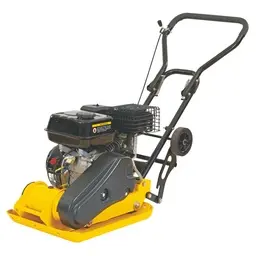
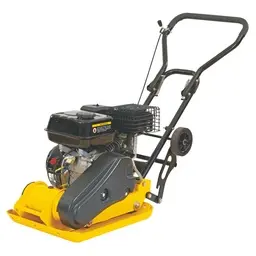
Correct soil compaction is the basis for screeds, paths, paving stones and pavement bases to maintain their shape over time. A vibrating plate with power adjusted to the type of soil reduces gaps, expels air and leaves a homogeneous surface ready to build or finish. Garland offers gasoline compactors designed for light construction, urbanization, rural road maintenance and technical gardening work within its machinery catalog.
This category fits within Garland's garden machinery range and can be complemented with Roll & Comb machines for lawn care.
Vibrating plate compactors are used to prepare bases on which pavers, tiles, concrete or asphalt will later be laid. They also work well for settling gravel paths, ditch fills and dirt soils before planting or paving. The plate transmits the vibration of the motor to the ground, causing the particles to reorganize and compacting the material in successive passes.
Unlike a manual roller, the vibrating plate acts with high frequency on a controlled surface, which makes it especially useful in narrow areas, corners and next to walls where heavy machinery cannot enter.
The COMPAC and Garland range is made up of gasoline compactors with a 196 cm3 engine and 4.1 kW power, a common configuration for intensive use plates.
The COMPAC 511 WQG-V26 model has a 530 x 370 mm plate, a suitable size for work on medium surfaces, pavement repairs and wide trenches. The COMPAC 713 WQG-V26, with a 540 x 420 mm plate, gains some contact surface and moves more material per pass, useful when you need to move quickly on esplanades or paths.
Both machines share the same power unit, so the choice usually depends on the usual size of the job and the ease of maneuvering at the place of use. For users who also need compressed air equipment in the workshop, at Garland we have electric compressors.
The reliability of a gasoline compactor depends a lot on routine maintenance. Before each day it is advisable to check the engine oil level, check that the plate joints have no play and clean the cooling fins. After work, removing traces of dirt and sand from the chassis and plate prevents dirt from accumulating and eventually affecting the bearings.
Regarding use, it is important to move at a constant speed, do not force the machine on extremely hard surfaces and always work with safety footwear and hearing protection. The technical documentation for each model details the oil change intervals and recommended checks.
For loose soil, sand and fine gravel, a 530 x 370 mm plate such as the COMPAC 511 is usually sufficient. In jobs where gravel is compacted or long paths are prepared, the wider plate of the COMPAC 713 helps to cover the surface sooner.
It depends on the material and the thickness of the layer, but as a general reference, it is worked in layers of 10 to 15 cm and between three and five crossed passes are made until the plate rebounds without sinking the ground.
Yes, on paving stone laid dry to settle it on its sand bed. It is advisable to protect the surface with a rubber sheet or a specific accessory to avoid marks on the blocks.
You can buy all available models directly on our website Garland or contact our official distributors.
For broader maintenance projects, you can also review Garland robotic lawnmowers and high-pressure washers.
 {{type}}
{{desc}}